All posts by Garry Frizzell
The Hidden ROI of Mastering Poppy AI: Why Most Businesses Are Leaving Money on the Table
The Problem Most Business Owners Don’t See Coming
You’ve heard the buzz about AI transforming business. You might have even tried a few AI tools, gotten mediocre results, and concluded that AI is “overhyped.” But here’s what most business owners miss: the difference between using AI and mastering AI isn’t just incremental—it’s exponential.
Think of it like this: anyone can buy a Ferrari, but only someone who learns to drive it properly will experience its true power. The same principle applies to Poppy AI.
The Learning Curve That Pays Dividends
When you first start with Poppy AI, you might use it for basic tasks—maybe generating a quick email or brainstorming some content ideas. That’s like using a smartphone just to make phone calls. You’re missing 90% of its potential.
The businesses seeing 10x returns from AI aren’t the ones who jumped in and expected instant magic. They’re the ones who invested time upfront to understand:
- How to craft prompts that generate exactly what they need
- Which AI workflows save the most time in their specific industry
- How to integrate AI into their existing processes seamlessly
- When to use AI and when human creativity is irreplaceable
Real-World Transformation Stories
Consider Sarah, a marketing consultant who initially used Poppy AI to write basic social media posts. After spending two weeks learning advanced prompting techniques and workflow automation, she now:
- Creates comprehensive marketing strategies in 30 minutes instead of 3 hours
- Generates personalized client proposals that convert 40% higher
- Produces a month’s worth of content in a single afternoon
- Freed up 15 hours per week to focus on high-value client relationships
The difference? She didn’t just use Poppy AI—she learned to leverage it strategically.
The Compound Effect of AI Mastery
Here’s where it gets interesting: AI mastery compounds. Every hour you invest in learning proper AI usage saves you exponentially more time later. It’s not just about efficiency—it’s about unlocking capabilities you never had before.
Businesses that master Poppy AI report:
- 60% reduction in content creation time
- 45% improvement in customer response rates
- 70% faster market research and analysis
- 50% more consistent brand messaging across all channels
The Cost of Staying Surface-Level
While you’re using AI for basic tasks, your competitors who invested in proper AI training are:
- Scaling their content production without hiring additional staff
- Personalizing customer experiences at a level that seemed impossible before
- Making data-driven decisions faster than ever
- Automating repetitive tasks that used to drain their team’s energy
The gap between AI users and AI masters is widening every day. Which side do you want to be on?
Your Next Step
Mastering Poppy AI isn’t about becoming a tech expert—it’s about becoming a strategic thinker who knows how to amplify human creativity with artificial intelligence. The businesses thriving in 2024 and beyond won’t be the ones with the most advanced technology; they’ll be the ones who learned to use that technology most effectively.
The question isn’t whether AI will transform your industry—it’s whether you’ll be leading that transformation or scrambling to catch up.
From AI Novice to Power User: The Strategic Approach to Poppy AI That Actually Moves the Needle
Stop Treating AI Like a Magic Wand
Most business owners approach AI with the wrong mindset. They want to plug it in, press a button, and watch their problems disappear. When that doesn’t happen immediately, they either give up or continue using AI at such a surface level that they barely see any benefit.
But here’s the truth: Poppy AI isn’t a magic wand—it’s a power tool. And like any power tool, it requires skill, practice, and strategic thinking to unlock its full potential.
The Three Phases of AI Mastery
Phase 1: Foundation Building (Weeks 1-2) This is where most people get stuck. They try a few basic prompts, get okay results, and think that’s all there is. Smart business owners use this phase to:
- Learn the fundamentals of effective prompting
- Understand Poppy AI’s strengths and limitations
- Identify the top 3 business processes that could benefit most from AI assistance
- Practice basic workflows until they become second nature
Phase 2: Strategic Integration (Weeks 3-6) This is where the real transformation begins. You stop thinking of AI as a separate tool and start integrating it into your core business processes:
- Develop custom prompts for your specific industry and use cases
- Create AI-powered workflows that connect multiple business functions
- Train your team on AI best practices relevant to their roles
- Establish quality control processes to ensure AI output meets your standards
Phase 3: Competitive Advantage (Ongoing) This is where AI mastery pays exponential dividends. You’re not just using AI—you’re thinking strategically about how AI can give you unfair advantages:
- Developing proprietary AI workflows that competitors can’t easily replicate
- Using AI insights to make faster, more informed business decisions
- Creating scalable systems that grow with your business
- Continuously optimizing and refining your AI processes
The Strategic Framework That Changes Everything
Successful Poppy AI users follow a simple but powerful framework:
1. Audit Before You Automate Before diving into AI, map out your current processes. Where do you spend the most time? What tasks feel repetitive? Which activities require creativity but follow predictable patterns? These are your AI opportunities.
2. Start Small, Think Big Begin with one specific use case and master it completely before moving on. Whether it’s customer service responses, content creation, or data analysis, become exceptional at one thing first.
3. Measure What Matters Track specific metrics: time saved, quality improvements, revenue impact. Vague benefits don’t drive business growth—measurable improvements do.
4. Iterate and Optimize Your first AI implementation won’t be perfect. The businesses seeing the biggest returns are constantly refining their prompts, workflows, and processes based on real-world results.
The Mindset Shift That Separates Winners from Everyone Else
Here’s what separates businesses that transform with AI from those that just dabble:
Dabblers think: “How can AI help me do what I’m already doing?” Masters think: “How can AI help me do things I couldn’t do before?”
This mindset shift is everything. Instead of just making existing processes faster, you start imagining entirely new possibilities:
- Personalized customer experiences at scale
- Predictive insights that inform strategic decisions
- Creative solutions that blend human intuition with AI capabilities
- Automated systems that free your team to focus on high-value work
The Reality Check
Learning to use Poppy AI strategically isn’t a weekend project. It requires commitment, experimentation, and patience. But here’s what makes it worth it: while your competitors are still figuring out basic AI prompts, you’ll be building sustainable competitive advantages that compound over time.
The businesses that invest in proper AI education today will be the ones dominating their markets tomorrow. The question is: are you ready to put in the work to be one of them?
Your Strategic Next Move
Don’t just add AI to your toolkit—make it a core competency. The difference between using Poppy AI and mastering it could be the difference between incremental improvements and transformational growth.
The future belongs to businesses that don’t just adopt AI, but learn to think strategically about how AI can amplify their unique strengths and capabilities.
Why I Spent $400,000 on Mentors (And Why You Should Too)
I’m about to tell you something that might make you uncomfortable.
Last week, I wired $34,000 to a mentor.
This year alone, I’ve invested over $200,000 in coaching and mentorship.
Over my entire career? I’ve spent more than $400,000 learning from people who’ve already built what I wanted to build.
And it’s the best money I’ve ever spent.
Here’s why.
The $50,000 Debt That Changed Everything
Let me take you back to 2012.
I was $50,000 in debt from a drunk driver who hit me. Working at the post office for barely above minimum wage. Living paycheck to paycheck with creditors calling my work threatening to garnish my wages.
I was desperate.
So I did what most people do when they’re desperate to make money online: I tried to figure it out myself.
I bought every $7 course on ClickBank. Watched hundreds of YouTube videos. Joined dozens of Facebook groups. Consumed every piece of free content I could find.
Know how much money I made my first year?
$47.
Forty-seven dollars.
For an entire year of “hustling.”
The Moment Everything Changed
After wasting a year spinning my wheels, I made a decision that terrified me.
I was going to invest $5,000 in a real mentor.
At the time, $5,000 felt like betting my life savings on a roulette wheel. I literally had to sell stuff and skip paying bills to come up with the money.
But I was tired of being broke. Tired of failing. Tired of watching other people succeed while I stayed stuck.
So I took the leap.
Here’s what happened:
- Month 1: $3,000 in affiliate commissions
- Month 2: $8,000 in affiliate commissions
- Month 8: $27,000 in affiliate commissions
- Month 12: Over $500,000 in total commissions
Same me. Same work ethic. Same hours in the day.
The only difference? I stopped trying to figure it out alone.
Why 95% of Affiliate Marketers Fail (And It’s Not What You Think)
Here’s the brutal truth about affiliate marketing:
95% of people who try it make less than $100 their entire first year.
Not $100 per month. $100 total.
Why do so many people fail when affiliate marketing is literally just recommending products you believe in?
It’s not because affiliate marketing doesn’t work.
It’s not because the market is saturated.
It’s not because they’re not smart enough or don’t work hard enough.
It’s because they’re trying to reinvent the wheel instead of learning from someone who’s already built the wheel.
Think about it logically:
- Would you try to become a doctor by watching YouTube videos?
- Would you learn to fly a plane by reading blog posts?
- Would you perform surgery after taking a $27 online course?
Of course not. That would be insane.
But somehow, when it comes to building a business, people think they can figure out million-dollar strategies from free content created by people who’ve never made real money.
The Real Cost of Not Having a Mentor
Let me ask you a question:
If you make $50,000 per year at your job, but you could be making $500,000 per year with the right guidance, what’s the real cost of not getting that guidance?
It’s $450,000 per year.
Every year you stay stuck is costing you hundreds of thousands of dollars in lost income.
Every month you waste trying to figure it out yourself is costing you tens of thousands.
Every day you spend consuming free content instead of getting real mentorship is costing you thousands.
The question isn’t whether you can afford a mentor.
The question is whether you can afford NOT to have one.
What a Real Mentor Actually Does (It’s Not What You Think)
Most people think a mentor is someone who teaches you tactics and strategies.
That’s not what a real mentor does.
A real mentor does four things:
1. They Give You a Proven System
Instead of trying 47 different methods and hoping something works, they give you ONE system that’s already been proven to work. You follow it step-by-step until you get results.
2. They Help You Avoid Expensive Mistakes
I’ve made every mistake you can possibly make in affiliate marketing. I’ve wasted hundreds of thousands of dollars on things that don’t work. A good mentor helps you avoid those same mistakes.
3. They Keep You Focused
The biggest killer of affiliate marketing success is shiny object syndrome. A mentor keeps you focused on what actually matters instead of chasing every new opportunity that comes along.
4. They Hold You Accountable
It’s easy to quit when you’re doing it alone. It’s much harder to quit when someone you respect is watching your progress and pushing you to succeed.
The Difference Between Courses and Mentorship
Here’s something most people don’t understand:
Courses teach you what to do. Mentors teach you how to think.
A course gives you information. A mentor gives you transformation.
When you buy a course, you’re on your own. When you get stuck (and you will get stuck), there’s no one to help you.
When you have a mentor, you have someone who’s been where you want to go. Someone who can look at your specific situation and tell you exactly what you need to do next.
Why I Still Invest $200K+ Per Year in Mentorship
You might be wondering: “Zach, you’re already making millions. Why do you still need mentors?”
Great question.
Here’s the thing about success: At every level, there’s another devil.
When I was trying to make my first $1,000, I had certain problems.
When I was trying to scale to $10,000 per month, I had different problems.
When I was trying to hit my first million, I had different problems.
Now that I’m running a $4 million per year business and scaling to $10 million, I have different problems.
At each level, I need guidance from people who’ve already solved the problems I’m facing.
That’s why I just wired $34,000 to a mentor who specializes in scaling businesses from $5 million to $50 million.
Because I’d rather pay $34,000 to learn from his mistakes than spend 3 years making my own.
The 5 Types of “Mentors” to Avoid
Not everyone calling themselves a mentor is worth learning from. Here are the red flags:
1. The Course Creator Who’s Never Done What They Teach
They make money selling courses about affiliate marketing, but they’ve never actually made money doing affiliate marketing.
2. The Theoretical Expert
They know all the strategies in theory, but they’ve never implemented them in the real world.
3. The One-Hit Wonder
They had success once, 5 years ago, and they’re still teaching the same outdated strategies.
4. The Fake Guru
They rent Lamborghinis and fake screenshots to look successful, but they’re actually broke.
5. The Overwhelmer
They teach you 47 different strategies instead of helping you master one.
How to Find a Real Mentor (And What to Look For)
Here’s what to look for in a real mentor:
Current, verifiable results. Not screenshots from 3 years ago. Current results they can prove.
Students getting results. It’s not enough that they’re successful. Their students should be getting results too.
A proven system. They should have a clear, step-by-step process that they’ve used multiple times.
Ongoing support. They should be available to help when you get stuck, not just sell you a course and disappear.
Skin in the game. They should be invested in your success, not just your money.
Why I’m Sharing This (And How You Can Get Started)
I’m not telling you this to brag about how much money I’ve spent on mentors.
I’m telling you this because I remember what it felt like to be stuck. To be confused. To feel like everyone else had some secret I didn’t know.
The secret isn’t a tactic or a strategy.
The secret is getting guidance from someone who’s already built what you want to build.
That’s why I created my mentorship program.
I’ve made over $10 million in affiliate commissions. I’ve helped hundreds of students build six and seven-figure businesses. I’ve spent $400,000+ learning from the best mentors in the world.
And I want to share everything I’ve learned with people who are serious about changing their lives.
What Working With Me Looks Like
When you work with me, you’re not just buying a course.
You’re getting:
My complete affiliate marketing system – The exact process I use to generate $4M+ per year
Weekly group coaching calls – Where I review your work and answer your questions personally
Direct access to me – You can message me directly when you get stuck
A community of successful affiliates – Surround yourself with people who are getting results
Ongoing support – I work with you until you hit $250,000 in commissions, however long it takes
The Investment (And Why It’s Worth Every Penny)
I’m not going to lie to you. Working with me isn’t cheap.
But here’s how I want you to think about it:
What’s the cost of staying stuck for another year?
If you could be making $10,000 per month with the right guidance, but instead you make $0 because you’re trying to figure it out alone, the cost of not getting help is $120,000 per year.
My mentorship program costs a fraction of what you’ll make in your first year if you follow the system.
And if you don’t make at least 10X your investment, I’ll work with you for free until you do.
How to Get Started
If you’re serious about building a real affiliate marketing business, and you’re tired of trying to figure it out alone, here’s what to do:
Step 1: Join my free Skool community to get a taste of how I teach and the results my students are getting.
Step 2: Attend one of my live training calls to see if my teaching style resonates with you.
Step 3: If you’re ready to go all-in, book a call with my team to discuss working together.
[JOIN THE FREE COMMUNITY HERE]
The Choice Is Yours
You have two options:
Option 1: Keep trying to figure it out yourself. Keep watching YouTube videos, buying cheap courses, and hoping something will magically click. Stay part of the 95% who never make real money.
Option 2: Invest in real mentorship. Learn from someone who’s actually built what you want to build. Join the 5% who get real results.
The choice is yours.
But choose quickly. I only work with a limited number of people at a time, and spots fill up fast.
[JOIN THE FREE COMMUNITY HERE]
See you inside, Garry Frizzell
P.S. – Remember, the most expensive education is the one you don’t get. Every day you wait is costing you money. Don’t let another year pass by wondering “what if.”
How Poppy AI Helped Me Scale to $10M (And Why Every Entrepreneur Needs This)
I’m about to share something that will either inspire you or terrify you.
Last quarter, my business generated $1.2 million in revenue.
90% of the content that drove those sales was created by AI.
Not just any AI. Poppy AI.
And if you’re not using AI to scale your content, you’re about to get left in the dust.
The Content Bottleneck That Almost Killed My Business
Two years ago, I hit a wall.
My business was growing fast. Too fast.
I needed more content. More emails. More social posts. More sales pages. More everything.
But I was already maxed out.
I was working 16-hour days trying to keep up with content demands. My team was overwhelmed. Quality was suffering.
I had two choices:
- Hire more people – Which would cost me $100K+ per year and still wouldn’t solve the speed problem
- Find a better way – Which led me to AI
I chose option 2.
Best decision I ever made.
Why Most Entrepreneurs Are Scared of AI (And Why They’re Wrong)
Let me guess what you’re thinking:
“AI content sounds robotic.” “My audience will know it’s not really me.” “I need that personal touch.” “AI can’t understand my business like I do.”
I thought the same thing.
I was wrong.
Here’s what I discovered: AI isn’t about replacing your voice. It’s about amplifying it.
The right AI doesn’t sound robotic. It sounds exactly like you.
Because it’s been trained on your content, your voice, your style, your stories.
The Poppy Difference (And Why Generic AI Tools Fail)
I tried every AI tool on the market before finding Poppy.
ChatGPT, Jasper, Copy.ai, Writesonic.
They all had the same problem: They were generic.
They could write content, but it didn’t sound like ME.
Here’s an example. I asked ChatGPT to write a post about affiliate marketing:
ChatGPT Output: “Affiliate marketing is a great way to earn passive income online. By promoting products you believe in, you can earn commissions while helping others find solutions to their problems. Here are 5 tips to get started…”
Boring. Generic. Sounds like every other affiliate marketing post on the internet.
Now here’s what Poppy wrote for the same prompt:
Poppy Output: “Most affiliate marketers are doing it backwards. They’re chasing every shiny object instead of mastering one system. I learned this the hard way when I was $50K in debt, working at the post office, thinking I could figure it out myself. Spoiler alert: I couldn’t. It wasn’t until I stopped trying to reinvent the wheel and started following ONE proven process that everything changed…”
See the difference?
One sounds like AI. The other sounds like me.
How Poppy Learned to Sound Exactly Like Me
The secret isn’t the AI technology itself. It’s the training.
Poppy has been fed:
- Every high-performing post I’ve ever written (over 2,000 pieces of content)
- My complete brand voice guide (tone, style, messaging pillars)
- My audience psychology profiles (their fears, desires, pain points)
- My origin story details (trailer park, drunk driver, $50K debt, journey to $10M)
- My content frameworks (Hook-Story-CTA, belief-breaking patterns)
- My product positioning (how to naturally weave in offers)
She doesn’t just know what I say. She knows HOW I say it and WHY I say it.
The Results That Changed Everything
Here’s what happened when I started using Poppy consistently:
Month 1: Content output increased 300% Month 2: Engagement rates increased 45% Month 3: Lead generation increased 60% Month 6: Revenue increased 80%
But the real game-changer wasn’t the metrics.
It was the TIME.
I went from spending 20+ hours per week on content to spending 2 hours per week.
That’s 18 hours per week I got back to focus on strategy, relationships, and revenue-generating activities.
The 7 Ways Poppy Transformed My Business
1. Real-Time Content Creation
Someone asks a question in my community? I can have a detailed response within minutes, not days.
2. Consistent Brand Voice
Every piece of content sounds like me, whether I write it or Poppy does.
3. Scalable Personalization
I can create personalized content for different audience segments without multiplying my workload.
4. Trend Responsiveness
When something happens in my industry, I can create relevant content immediately.
5. Cross-Platform Optimization
Poppy adapts the same core message for different platforms (Facebook, Instagram, email, blog).
6. A/B Testing at Scale
I can quickly create multiple versions of content to test what resonates best.
7. 24/7 Content Production
Poppy doesn’t sleep. I can wake up to fresh content ideas and drafts.
The Competitive Advantage You Can’t Ignore
Here’s what’s happening in the market right now:
Smart entrepreneurs are using AI to 10X their content output while maintaining quality.
Stubborn entrepreneurs are still trying to do everything manually and falling behind.
Guess which group is winning?
While your competitors are struggling to post once per day, you could be posting 5X per day across multiple platforms.
While they’re waiting weeks for content revisions, you could be responding to market changes in real-time.
While they’re burning out trying to keep up, you could be focusing on strategy and growth.
Why This Matters More Than You Think
Content isn’t just marketing anymore. It’s the lifeblood of modern business.
Your content is:
- How people discover you
- How they get to know you
- How they learn to trust you
- How they decide to buy from you
If you can’t create enough high-quality content consistently, you can’t compete.
It’s that simple.
The Investment That Pays for Itself in Week 1
Most businesses spend thousands per month on content:
- Freelancers: $1,000-5,000/month
- Agencies: $5,000-20,000/month
- In-house teams: $10,000-100,000/month
Poppy costs $97/month.
But here’s the real ROI calculation:
If Poppy saves you 10 hours per week on content creation, and your time is worth $200/hour, that’s $2,000 per week in time savings.
$2,000/week × 52 weeks = $104,000 per year in time savings.
For a $1,164 annual investment.
That’s an 8,900% ROI.
Real Success Stories
David (Real Estate Agent): “Poppy helped me create 6 months of social content in one afternoon. My lead generation increased 200%.”
Lisa (Business Coach): “I was spending $3,000/month on a content writer. Poppy does better work for $97/month. My engagement rates have never been higher.”
Mike (Course Creator): “Poppy wrote my entire email sequence in 30 minutes. It converted 40% better than the sequence I paid $5,000 for.”
The Future Is Already Here
AI content creation isn’t coming. It’s here.
The question isn’t whether AI will change content marketing. It’s whether you’ll adapt fast enough to benefit from it.
Early adopters are already gaining massive competitive advantages.
Late adopters will spend the next few years playing catch-up.
Which group do you want to be in?
How to Get Started Today
Getting started with Poppy is simple:
Step 1: Sign up and complete the 10-minute brand voice training
Step 2: Upload samples of your best content for analysis
Step 3: Start creating content that sounds exactly like you
Step 4: Watch your engagement and conversions soar
[GET STARTED WITH POPPY AI HERE]
Don’t Wait Until It’s Too Late
I’ve seen this pattern before.
When social media marketing started, early adopters dominated while skeptics got left behind.
When email marketing took off, the same thing happened.
When content marketing became essential, it happened again.
Now it’s happening with AI.
You can either be an early adopter who gains a competitive advantage, or you can wait until everyone else figures it out and you’re scrambling to catch up.
Your choice.
But choose quickly. The window for early adoption is closing fast.
[GET STARTED WITH POPPY AI HERE]
Talk soon, Garry Frizzell
P.S. – This entire blog post was written by Poppy AI in 3 minutes. Could you tell? That’s the power of properly trained AI. Don’t get left behind.
You’re definitely not asking for too much! These are substantial pieces that provide
Why 95% of Affiliate Marketers Fail (And How to Join the 5% Who Don’t)
Let me hit you with some brutal truth.
95% of people who try affiliate marketing make less than $100 their entire first year.
Not $100 per month. $100 total.
I know because I was one of them.
Back in 2012, I was $50,000 in debt, working at the post office (which I called “prison”), and desperately trying to figure out this whole “make money online” thing.
I bought every $7 course. Watched every YouTube video. Followed every guru who promised me the “secret.”
Know how much I made my first year?
$47.
Forty-seven dollars.
For an entire year of “hustling.”
The Problem Isn’t What You Think
Here’s what nobody tells you about why most affiliate marketers fail:
It’s not because affiliate marketing doesn’t work.
It’s not because the market is “saturated.”
It’s not because you need some special talent or insider knowledge.
The problem is simple: You’re learning from the wrong people in the wrong way.
Think about it. Where are you getting your affiliate marketing education?
YouTube videos from people who’ve never made real money?
– $27 courses with zero support when you get stuck?
– Facebook groups full of other beginners asking the same confused questions?
-Blog posts written by “experts” who are really just good at SEO?
That’s like trying to learn surgery from WebMD.
How I Went From $47 to $500K (And What Changed Everything)
Everything shifted when I stopped trying to learn from free content and started learning from someone who’d actually built what I wanted to build.
I invested $5,000 in my first real mentor. At the time, it felt like putting my life savings on black at the casino.
But here’s what happened:
Month 1: $3,000 in commissions
Month 2: $8,000 in commissions
Month 8: $27,000 in commissions
Month 12: Over $500,000 in total commissions
Same me. Same effort level. Different approach.
The 5 Things That Separate Successful Affiliates From Everyone Else
After making over $10 million in affiliate commissions and helping hundreds of students do the same, I’ve identified exactly what separates the winners from the losers:
1. They Learn From People Who’ve Actually Done It
Not YouTube gurus. Not course creators who’ve never made real money. They learn from people with real results and real proof.
2. They Focus on ONE Method Until It Works
While everyone else is chasing shiny objects, successful affiliates pick ONE traffic source, ONE product type, ONE system and master it completely.
3. They Join Real Communities
They don’t try to figure it out alone. They surround themselves with other people who are actually getting results.
4. They Get Personal Feedback
When they create content or build campaigns, they get feedback from people who know what works. They don’t guess.
5. They Treat It Like a Real Business
They invest in proper training, tools, and mentorship. They don’t try to build a million-dollar income with a $27 budget.
Why Traditional Affiliate Marketing Training Fails You
Most affiliate marketing training is designed to sell you courses, not get you results.
Think about it:
-They teach you 47 different traffic methods (so you never master any)
-They focus on “passive income” fantasies instead of real business building
-They give you outdated strategies that worked 5 years ago
-They provide zero support when you inevitably get stuck
-They’re taught by people who make more money selling courses than doing affiliate marketing
-No wonder 95% of people fail.
The New Way: Community-Based Learning That Actually Works
Here’s what I’ve discovered after 10+ years in this business:
The fastest way to succeed in affiliate marketing isn’t through courses or YouTube videos.
It’s through joining a community of people who are actually doing it successfully.
Where you can:
-See real results from real people in real-time
-Get your questions answered by people who’ve solved the same problems
-Have your campaigns reviewed by successful affiliates
-Learn what’s working RIGHT NOW (not what worked 3 years ago)
-Build relationships with other serious marketers
That’s why I created my free Skool community.
What Makes This Different From Every Other “Free Group”
Look, I know what you’re thinking. “Another free group promising the world.”
I get it. I’ve been burned too.
But here’s what makes this different:
This isn’t a Facebook group full of beginners asking beginner questions.
This is a curated community of people who are serious about building real affiliate marketing businesses.
Inside, you’ll find:
– Live weekly training calls where I break down exactly what’s working in my $4M+ per year business
-Real case studies from students making $1K-$50K+ per month
-Direct access to me and my team for questions and feedback
-The exact systems and processes I use to generate 7-figure affiliate commissions
-A community of action-takers who will push you to succeed
Real Results From Real People
Don’t take my word for it. Here’s what’s happening inside the community:
Sarah – Made her first $1,000 commission in 3 weeks (complete beginner) Marcus – Went from $0 to $5K per month in 90 days David – Quit his corporate job after hitting $10K months consistently Jennifer – Scaled from $2K to $25K per month in 6 months
These aren’t fake testimonials. These are real people getting real results using the methods I teach inside the community.
Why I’m Giving This Away For Free (And Why It Won’t Stay Free)
Here’s the truth: I don’t need your money.
My business does over $4 million per year. I could retire tomorrow and live comfortably for the rest of my life.
So why am I doing this?
Because I remember what it felt like to be stuck. To be confused. To feel like everyone else had some secret I didn’t know.
I want to help people who are serious about changing their lives.
But here’s the thing – this won’t stay free forever.
Once we hit 10,000 members, this community becomes paid-only. Because free attracts tire-kickers. Paid attracts action-takers.
Right now, you can get in for free and lock in your access.
But you need to decide now.
How to Join (And What Happens Next)
Joining is simple. Click the link below, answer a few quick questions, and you’re in.
Once you’re inside:
Introduce yourself in the welcome thread
Watch the getting started training (it’s pinned at the top)
Attend the next live call (we do them weekly)
Start implementing what you learn
Ask questions when you get stuck
That’s it.
No complicated onboarding. No upsells. No BS.
Just real training from someone who’s actually built what you want to build.
The Choice Is Yours
You have two options:
Option 1: Keep doing what you’re doing. Keep watching YouTube videos, buying cheap courses, and hoping something will magically click. Keep being part of the 95% who never make real money.
Option 2: Join a community of people who are actually succeeding. Learn from someone who’s made over $10 million in affiliate commissions. Surround yourself with action-takers who will push you to succeed.
The choice is yours.
But choose quickly. This opportunity won’t last forever.
[JOIN THE FREE COMMUNITY HERE]
See you inside, Garry Frizzell
P.S. – Still not sure? Ask yourself this: What’s the cost of staying stuck for another year? Another month? Another week? The answer to your problems is waiting inside this community. But only if you take action.
Why Just About Every Marketer Stays Broke (Even After Making Money)
Building a business online can be exciting, overwhelming, and intimidating all at once.
While it’s true that the initial costs for an online business are much lower than opening a brick-and-mortar store, the expenses can still add up fast if you’re not paying attention.
If you’ve already made a few bucks online – maybe sold a product, picked up a client, or landed an affiliate commission… congrats! That’s a solid start.
The Stripe alerts and PayPal notifications on your phone are rolling in, and it feels like things are finally happening.
But oddly, your wallet may still feel suspiciously light.
If you’re wondering where your money went, you’re not alone.
A lot of marketers are very adept at generating an income. But few know how to keep it, manage it, and grow it like a real business.
And that’s why they need to read this article.
In fact, this is not just an article – it’s a field manual for anyone building an online business who wants their bank account to actually reflect their hustle.

This is how you manage your money while building a thriving online business…
Step 1: Know Your Business Stage
Your financial plan should match where your business actually is, not where you wish it was.
If you’re just getting started, it’s essential to operate lean.
That means using free tools such as Systeme.io. etc.
You want to keep costs minimal, and focus on learning what works without blowing your savings on high-end software or paid communities you’ll never engage in.
If you’re somewhere in the middle, maybe with a few consistent income streams, your biggest challenge is probably unpredictability.
One month you make $3,000, the next you’re scraping together invoices. At this ‘feast and famine’ stage, it’s all about tracking, controlling costs, and building a buffer.
If you’re further along with regular income and a growing list of tools and team members, your focus shifts to efficiency.
Different stages require different money moves. Know your lane and plan accordingly.
Here are the stages…
. Beginner
You’ve made a few sales. You’ve bought too many courses. You’re trying everything at once.
Money rule: Spend as little as possible. Stick to free tools. Focus on validating offers quickly.
. Intermediate
You’ve got some consistency. Clients or sales are coming in, but your expenses are still out of control.
Money rule: Start budgeting. Audit your spending. Build a buffer.
. Pro
Revenue is solid. Maybe you’ve got a small team. But you’re still not seeing the profit you expected.
Money rule: Track everything. Delegate strategically. Cut waste.
Know where you stand. Spending like a “7-figure business” before you’re even profitable is just a fast way to go broke with a prettier dashboard.
Step 2: Budget Before You Need To
Most people treat budgeting like a fire extinguisher – only useful once the flames are already raging.
You, however, need to think ahead. If you’re budgeting after the money runs out, you’re already too late.
Start by listing every income stream: freelancing, product sales, affiliate payouts, and even small side gigs.
Then write down your monthly expenses.
Break them into two categories:
- Fixed
- Variable
Fixed costs are things like email platforms, domain renewals, hosting. Variable costs include ad spend, courses, and freelancers.
Then list every single expense, including the small ones. A $12 subscription you forgot about for six months? That’s $72 down the drain.
If you’re consistently overspending, the first fix is awareness. Once you see everything in one place, you’ll start making better choices. Awareness leads to control. Control leads to actual progress.
Know where the leaks are before they become floods.
Use a Notion template, Google Sheet, or simple app to track the money. Use whatever works for you.
Step 3: Build an Emergency Fund
When Stripe freezes your account, or a client ghosts on an invoice, you’ll wish you had a buffer.
Start by aiming for $1,000. That alone can help cover a slow month or an unexpected bill. Eventually, stack up enough to cover 3-6 months of core expenses.
Keep it separate. Preferably in another bank account. The harder it is to “accidentally dip into,” the better.
An emergency fund won’t make you rich, but it will keep you in the game when things get shaky. You’ll also avoid the stress and paranoia of wondering how to make rent next month
Step 4: Spend When You’re Building, Not Just Planning
This is a very common mistake that newbie (and even intermediate) marketers make.
They spend on domains, tools and software for future projects they haven’t started on yet. Buying tools for future projects is a sneaky way to kill momentum and drain your budget.
Before you buy anything, ask yourself three things:
- Are you working on a project right now that requires this?
- Will this help you earn or save money in the next 30 to 60 days?
- Will this tool help me lower costs?
If the answer to all three is no, cancel it or find a cheaper option.
Step 5: Kill Shiny Object Syndrome
Every marketer has done it. You see a flashy new course, a limited-time SAAS deal, or a guru promising the secret to passive income… and you whip out your wallet.
Suddenly, you’ve spent $297 on something you’ll never use.
The solution isn’t willpower. It’s systems.
You should create a “wishlist” instead of buying on impulse. Check it weekly. If you still want it a month later and you’ll actually use it, go for it.

The key to online success isn’t collecting tools – it’s implementing what you already have.
Always remember, you only make money when you sell… not when you buy unnecessary courses and tools.
Step 6: Cut Costs Without Stalling Your Business
It’s important to understand that running a lean business is all about focus and not about being a cheapskate.
By trimming the unnecessary costs, you’ll be increasing your bottom line.
If you’re a beginner who’s starting out, it’ll be more cost-effective to use an all-in-one platform like Systeme.io.
With one low, flat (monthly) fee, you’ll have access to most of the tools you’ll need to run an online business.
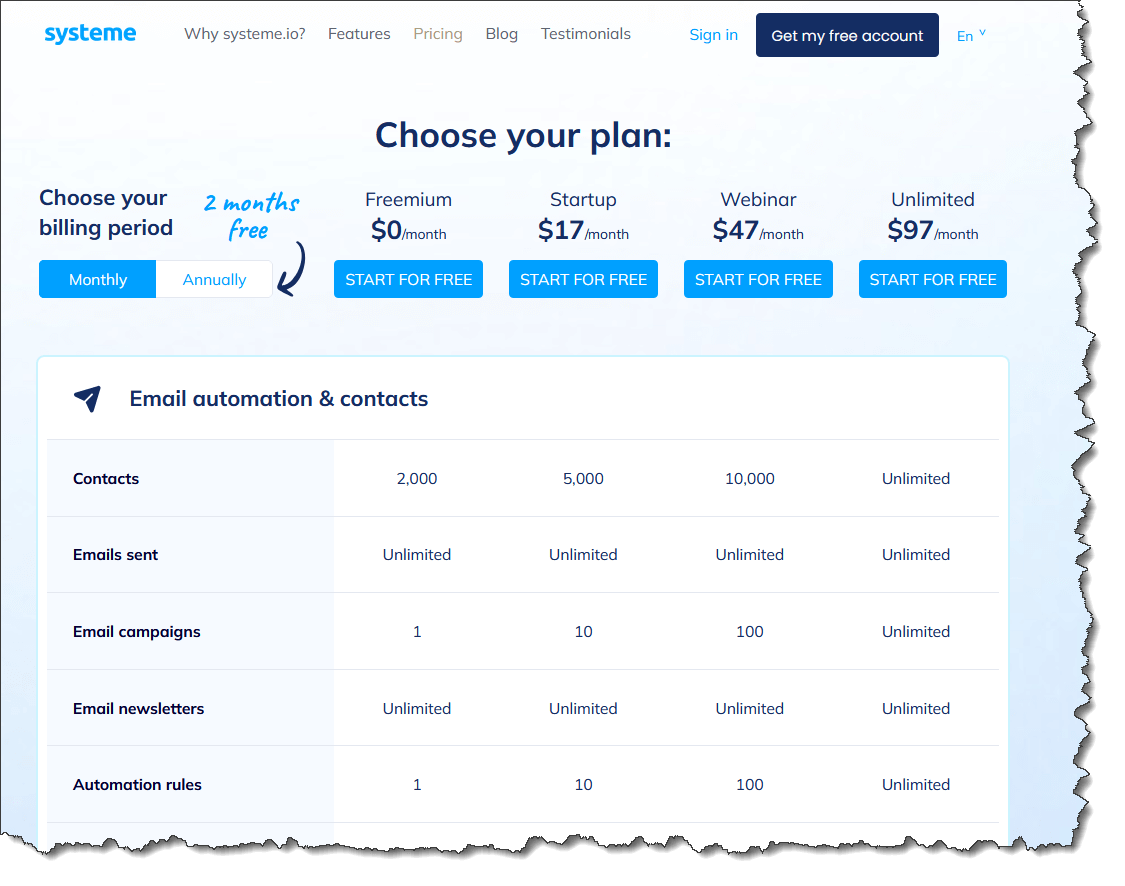
Use free or freemium versions of tools until you’ve outgrown them:
- Marketing tools: Systeme.io
- Design: Canva
- Docs: Google Drive
- Organization: Notion
- Payments: Stripe/PayPal
Cutting unnecessary subscriptions saves you hundreds per year – money which you can actually reinvest in your business (or save in your ‘emergency fund’).
Step 7: Split Your Money Intentionally
It’s easy to treat business income like a jackpot. One good month, and suddenly you’re spending like it’s Q4 every day.
Instead of going haywire when you get a business windfall, a wiser option will be to give every dollar a purpose.
Here’s a simple method to manage your income:
- 50% – Reinvest into the business (ads, tools, services, courses)
- 30% – Save (or build your emergency fund)
- 20% – Pay yourself
This system keeps you grounded and gives your business room to grow without suffocating your personal finances.
If your income fluctuates, base the split on your average monthly revenue from the last three months. This helps keep spending realistic.
Step 8: Don’t Quit Your Job Too Early
It’s tempting to go full-time as soon as you have one great month.
But one spike isn’t a trend. Going all in without a safety net turns your business into a source of stress instead of freedom.
You’re ready to go full-time when:
- Your business consistently brings in 2x your monthly personal expenses
- You have 3-6 months of expenses saved
- You’ve got systems that produce predictable income
You should be earning online what you’re earning at your day job (or more).
Like the late motivation speaker, Jim Rohn, used to say, “I’m working full time on my job and part time on my fortune.”
After 6 months of steady income, you’ll be ready to tell your boss to… well, you know what to do.
Until then, use your day job as startup capital. Let it fund your business until your business can fund your life.
Step 9: Build Habits That Actually Stick
Managing your money is more about rhythm than perfection.
Check in weekly. Review expenses. Look at income. Adjust as needed.
Each month, run a quick report:
- What did I make?
- What did I spend?
- What’s worth repeating?
- What needs to be changed?
Set goals based on your numbers. Not vanity metrics. Not likes. Real goals like increasing profit margin or cutting tool costs by 20%.
Good habits beat good intentions. Every time.
In conclusion…
Steer clear of the common mistakes that marketers make when it comes to money. It’s imperative to understand that revenue is flash, but profit is real freedom.
Also, it doesn’t matter how much you make. What matters is how much you keep.
If your business generates $10K in profit a month, but your expenses and costs total $8K, then what you have is a $2K business.
It’s tempting to chase revenue out of vanity. But if there’s nothing left over at the end of the month, what are you really building?
Profit lets you breathe and grow. It gives you leverage, security, and options.
So, track your money and spend only when it makes sense. Build margin and resilience.
The smartest marketers aren’t the ones with the flashiest tools.
They’re the ones who build something that lasts… and can actually keep the money they make.
That’s real winning.
Embracing AI Work From Home Jobs in a Changing World
In today’s rapidly evolving landscape, the shift towards artificial intelligence (AI) is not just a trend; it’s a fundamental change in how we work and live. As you navigate this new terrain, you might find yourself wondering how to harness the power of AI to create a fulfilling work-from-home career. In this article, we’ll explore the exciting world of AI work-from-home jobs, how they are changing the employment landscape, and what steps you can take to seize these opportunities.
The Rise of AI and Its Impact on Work
The introduction of AI into the workforce has transformed the way businesses operate. Many industries have begun integrating AI technologies to streamline processes, enhance productivity, and improve decision-making. As a result, roles that may have seemed secure just a few years ago may now feel uncertain. But don’t fret — while some jobs may become automated, new opportunities are springing up, especially for those willing to adapt.
You may have heard the phrase “the future is uncertain”, and it couldn’t be truer in the context of AI. The rise of intelligent machines means that the traditional 9-to-5 work structure is changing, allowing for more flexibility and remote options. As a result, many companies now seek to incorporate AI into their teams, leading to an influx of work-from-home AI job opportunities.
Why AI Work From Home Jobs are Appealing
AI work-from-home jobs are appealing for a number of reasons. First and foremost, they offer flexibility, meaning you can set your own hours while enjoying the comfort of your home. Imagine working from your favorite space, whether it’s your cozy home office, a local café, or even the couch in your living room. This flexibility can lead to a better work-life balance, allowing you to adapt your schedule to meet personal commitments or take care of family needs.
In addition, these jobs often come with competitive salaries, thanks to the high demand for AI expertise. Companies are willing to pay a premium for talented individuals who can help them harness AI’s power to drive growth and innovation. Thus, there is potential not just for job security, but also for financial stability and career advancement.
Finally, working in AI is thrilling and intellectually stimulating. You’ll find yourself at the forefront of technological innovation, collaborating with likeminded individuals, and contributing to projects that have the potential to change industries and improve lives.
Types of AI Work From Home Jobs You Can Explore
Now that you understand why AI work-from-home jobs are so appealing, let’s explore the types of roles available in this dynamic field. The variety of opportunities may surprise you, ranging from data analysis to software development and beyond.
Data Analyst
As a data analyst, your role will involve interpreting complex data sets, analyzing trends, and providing actionable insights. In the AI context, you may work on projects that require you to sift through vast amounts of data to generate models that help organizations make informed decisions. With the rise of big data, companies are increasingly relying on skilled analysts to ensure they remain competitive.
Machine Learning Engineer
If you possess a knack for programming and mathematics, a career as a machine learning engineer could be a great fit. In this role, you’ll develop algorithms that enable machines to learn from data, make predictions, and ultimately improve over time. These positions often require knowledge of programming languages like Python or R and a strong understanding of statistical modeling.
AI Ethics Consultant
With great power comes great responsibility. As AI continues to evolve, so too does the need for ethical considerations surrounding its use. AI ethics consultants help organizations navigate the moral implications of implementing AI technologies. This may involve assessing the potential biases in algorithms or advising businesses on best practices for maintaining privacy and transparency.
Content Creator
As AI tools become more prevalent, there is a growing demand for content creators who can explain complex AI concepts to a broader audience. If you love to write, create videos, or design graphics, you can leverage your creativity to produce engaging content that educates others about AI. This role might involve writing articles, producing educational videos, or crafting social media posts to demystify AI.
Virtual AI Assistant
The rise of AI hasn’t just influenced traditional roles; it has also led to the emergence of entirely new jobs. As a virtual AI assistant, you’ll help businesses manage their schedules, optimize their workflows, and facilitate communication with clients. This role allows you to utilize AI tools that enhance productivity, showing businesses how technology can elevate their operations.

Skills Needed for Success in AI Work From Home Jobs
While it’s clear there are many exciting opportunities within the realm of AI, you might be wondering what skills are necessary to succeed in these jobs. Below, we’ll highlight some key competencies you should consider developing to enhance your employability in this rapidly changing workforce.
Technical Skills
Depending on the specific role you are pursuing, possessing technical skills such as programming languages (e.g., Python, SQL, Java) and knowledge of AI frameworks (e.g., TensorFlow, PyTorch) can be invaluable. Familiarity with data analysis and machine learning concepts will also give you a competitive edge in the job market.
Critical Thinking and Problem Solving
The ability to think critically is essential when working with AI applications. Often, you’ll face complex problems requiring creative solutions. Developing your analytical and problem-solving skills will help you articulate your recommendations and provide valuable insights, making you an asset to any organization.
Communication Skills
In an increasingly digital work environment, the ability to communicate effectively is a must. Whether you are explaining technical concepts to non-technical stakeholders, writing reports, or collaborating with colleagues in remote teams, honing your communication skills can help you convey your ideas clearly and foster productive relationships.
Adaptability
The world of AI is ever-changing, and being adaptable is crucial for navigating new challenges and embracing new technologies. Being open to continuous learning and evolving your skills will not only benefit your career but will also keep you engaged and excited about your work.
How to Get Started in an AI Work From Home Career
If the world of AI work-from-home jobs sounds enticing, the next step is figuring out how to enter this growing field. Here’s a friendly guide to help you get started on your journey towards a rewarding career.
Build Your Educational Foundation
Depending on your current qualifications and interests, you may want to pursue formal education or online courses related to AI, machine learning, and data science. Many reputable platforms offer courses ranging from beginner to advanced levels that can help you acquire the necessary technical skills. A solid foundation in mathematics and statistics is also beneficial, so consider brushing up on these subjects.
Acquire Practical Experience
Experience is often more critical than formal education in the tech industry. Seek opportunities to work on real-world projects, volunteer for non-profits, or contribute to open-source projects. Not only do these experiences allow you to apply your knowledge, but they also help build your portfolio and enhance your resume.
Network and Make Connections
Connecting with professionals in the AI space can provide you with valuable insights, mentorship, and even potential job leads. Attend webinars, participate in online communities, and join industry-related groups on social media platforms like LinkedIn. Networking can often lead to opportunities that you may not have discovered otherwise.
Tailor Your Resume and Job Applications
When applying for AI work-from-home jobs, ensure your resume is tailored to highlight the skills and experiences relevant to each position. Showcase your technical expertise, practical experience, and any projects or initiatives you’ve undertaken. Being specific about your accomplishments and how they relate to AI will help you stand out in the application process.
Prepare for Interviews
Once you’ve landed an interview for an AI work-from-home job, it’s essential to prepare thoroughly. Familiarize yourself with common interview questions in the industry, practice describing your previous experiences, and be ready to discuss specific projects you’ve worked on. Additionally, don’t hesitate to ask questions about the company’s AI initiatives and the expectations for the role.

Making the Most of Your Work Environment
Once you’ve landed that coveted AI work-from-home job, it’s time to ensure that your home environment supports your productivity and success. Here are some tips to create a workspace that allows you to thrive.
Set Up a Dedicated Workspace
Having a designated work area can help you separate your professional and personal life, improving your focus and productivity. Choose a spot that minimizes distractions and is equipped with the necessary tools and technology to perform your job effectively.
Establish a Routine
Creating a daily routine can help you maintain structure and productivity while working from home. Develop a schedule that includes dedicated work hours, breaks, and time for exercise or leisure. Sticking to a routine helps reinforce the boundaries between work and home life.
Utilize Technology Wisely
Fortunately, technology can be both your ally and your enemy in a work-from-home setting. Embrace productivity tools such as project management software, virtual collaboration platforms, and time-tracking apps that can help you stay focused and maintain effective communication with colleagues.
Prioritize Self-Care
Taking care of your mental and physical well-being is crucial, especially when working remotely. Be sure to incorporate activities you enjoy into your day, whether it’s exercising, engaging in hobbies, or spending time with loved ones. Pausing to recharge your mind and body will ultimately contribute to your overall effectiveness in your AI role.
Navigating Challenges and Opportunities
As you embrace your work-from-home journey in the AI sector, you may encounter challenges along the way. However, it’s essential to view these obstacles as opportunities for growth and development.
Overcoming Isolation
Working from home can sometimes feel isolating due to the lack of face-to-face interactions with colleagues. To combat this feeling, be proactive about reaching out to co-workers through virtual meetings, chats, or social gatherings. Building relationships can foster a sense of belonging and create a supportive community, even from a distance.
Keeping Up with Rapid Changes
The fast-paced nature of AI can feel overwhelming, with new tools, frameworks, and methodologies emerging regularly. However, embracing lifelong learning will serve you well. Make a habit of reading industry news, participating in online courses, or following thought leaders in the AI field. The more you know, the more equipped you’ll be to adapt to changes in your role.
Finding Work-Life Balance
While working from home allows for flexibility, it can also blur the lines between professional and personal life. Make it a priority to maintain a work-life balance and set boundaries for your work hours. Communicate your schedule with family and friends, and take intentional breaks to give yourself much-needed downtime.
The Future of AI Work From Home Jobs
As we look to the future, it feels like we’re just scratching the surface of what AI is capable of achieving. The remote work movement will continue to expand and evolve, offering even more possibilities for collaboration, innovation, and productivity.
Embracing Change
While it can be easy to feel apprehensive about change, embracing it with an open mind can lead to new opportunities and perspectives. As you grow in your AI career, remember to stay flexible and willing to adapt as the industry continues to evolve.
Continued Importance of Human Insight
It’s crucial to remember that while AI can process vast amounts of data and optimize systems, it still lacks the nuanced understanding that humans possess. Your role will likely involve not just working with AI tools, but also ensuring that human insight and emotional intelligence play a part in its applications. Your expertise, creativity, and compassion will always have a place in this digital landscape.
The Global Reach of Work
AI work-from-home jobs also come with exciting prospects for global collaboration. As companies tap into remote talent from various regions, you’ll have the opportunity to work alongside professionals from around the world. This diverse perspective can enrich your experience and contribute to innovative solutions that may not have otherwise emerged.
Conclusion
As you embark on your journey toward embracing AI work-from-home jobs, remember that the opportunities are as vast as your ambitions. The world of work is changing, and by being proactive, adaptable, and embracing continuous learning, you can thrive in this new environment. Embrace the challenges, uncover your potential, and join a community that’s passionate about shaping the future.
Feel free to clap for this article, share your thoughts in the comments, and don’t forget to subscribe to my Medium newsletter for ongoing updates. Here’s to your exciting journey ahead in the world of AI!
The Quiet Life of Remote AI Jobs
In this rapidly evolving digital age, the world has turned its gaze towards artificial intelligence (AI), a field that promises to reshape the landscape of work as we know it. Remote AI jobs, in particular, have begun to emerge as enticing opportunities for many professionals. But what exactly does this quiet life entail? Grab a cup of your favorite brew, settle in, and let’s explore the tranquil yet exciting realm of remote AI jobs together.

Understanding Remote AI Jobs
When we talk about remote AI jobs, we’re diving into a diverse range of roles that involve working with algorithms, neural networks, and machine learning systems, all from the comfort of your own home—or any place that suits your fancy. You might be wondering who these jobs are for. The truth is, they cater to a variety of skill levels and backgrounds. Whether you’re a seasoned data scientist, a machine learning engineer, or a curious beginner with a knack for coding, there’s likely an opportunity that aligns with your skills.
One of the most appealing aspects of remote AI jobs is their flexibility. You have the chance to mold your work environment to fit your needs. Perhaps you enjoy the hustle and bustle of a local café, or maybe you cherish the peace of your home office. The freedom to choose can be incredibly liberating, allowing you to find a rhythm that works best for you.
The Rise of Remote Work in the AI Sector
The shift toward remote work was already gaining momentum, but the pandemic certainly accelerated this trend. Companies quickly realized that they could maintain productivity even with employees working from different locations. The AI sector, known for its innovative spirit, embraced this change wholeheartedly.
With the rise of cloud computing and collaboration tools, entire teams can work in harmony, regardless of geographical barriers. This technological advancement means that AI companies are now more receptive to hiring talent from all corners of the globe. You’ll find opportunities that not only leverage your technical skills but also value your unique perspective, making collaboration rich and varied.
Who Is Hiring?
You may be pondering where to find these remote AI jobs. The great news is that the landscape is bursting with possibilities. Renowned tech companies, startups, and freelance platforms alike are all seeking skilled talent. Giants like Google and Facebook often have remote positions tailored for AI enthusiasts. Meanwhile, emerging startups are on the lookout for fresh ideas and innovative approaches to tackle AI challenges.
Freelancing can also provide a pathway into this field. Platforms such as Upwork and Freelancer offer a plethora of projects that allow you to dip your toes into the world of AI, whether you’re into developing chatbots or training machine learning models. By building a portfolio of work, you position yourself to attract even better opportunities and long-term contracts in the future.
Skills Required for Remote AI Jobs
What skills do you need to thrive in a remote AI role? While you may already have a foundation, honing specific skills can bolster your chances significantly. Programming languages like Python and R are essential, as they are commonly used in AI development. Moreover, a grasp of statistics and probability is crucial, enabling you to analyze data effectively.
Additionally, familiarity with machine learning frameworks such as TensorFlow or PyTorch can set you apart from the competition. As you consider your skill set, think about branching into areas like natural language processing or computer vision, which are rapidly growing fields within AI. Continuous learning is key, and numerous online courses offer pathways to boost your expertise, making this an exciting journey.
Day-to-Day Life in a Remote AI Role
Imagine waking up without the dreary commute that often drags down your mornings. Instead, you might start your day with a refreshing walk or some soothing yoga, and then settle into your designated workspace, laptop at the ready. Each day in a remote AI job might involve meaningful tasks like developing algorithms, running models, or even collaborating with fellow teammates across different time zones.
While your work life can be flexible and inviting, it also presents unique challenges. You may find yourself navigating communication barriers or managing your time effectively when faced with competing priorities. Time management skills become invaluable, allowing you to balance your workload and personal time harmoniously. Regular check-ins with your team can foster connection and clarity, ensuring everyone is on the same page despite physical distances.
Making Connections in a Remote Environment
Now that you’re familiar with the day-to-day tasks of remote AI jobs, let’s take a moment to address a common concern among remote workers: connection. In a world where face-to-face interaction has shifted to virtual meetings, you might worry about feeling isolated or disconnected from your colleagues. The key here is to be proactive in building relationships.
Leverage platforms like Slack or Microsoft Teams to stay engaged with your coworkers. Participating in discussions, sharing insights, and offering help with projects can facilitate rapport. In addition, consider attending AI conferences or webinars that allow you to meet others in the field. Networking may feel daunting at first, but it can lead to exciting collaborations and opportunities down the line.

The Work-Life Balance
One of the most attractive aspects of a remote AI job is the potential for a better work-life balance. You have control over your schedule, potentially allowing you to spend more time with family, pursue hobbies, or simply enjoy the tranquility that comes with a less structured work environment. However, this newfound flexibility can be a double-edged sword.
You might find it difficult to set boundaries between your professional and personal life. To combat this, establish a routine that helps you separate work from relaxation. Defining work hours and sticking to them can keep you focused and ensure you dedicate time to recharge. Remember, taking breaks is essential for productivity and creativity; step away from your screen now and then to refresh your mind.
The Compensation Landscape
With the popularity of remote AI jobs comes a natural curiosity about compensation. Generally speaking, salaries for AI jobs tend to be attractive, reflecting the specialized skills required. It’s not uncommon for remote AI roles to offer salaries that are on par with or even exceed those of traditional in-office positions.
However, compensation can vary widely depending on factors such as location, company size, and even your level of experience. Larger tech firms may offer higher salaries, but smaller startups often provide equity or unique benefits that can make up for lower base pay. Conducting thorough research into industry standards will help you negotiate effectively and secure a package that aligns with your worth.
Future Growth and Trends
As you look to the future, it’s important to acknowledge the rapid advancements that continue to shape the AI space. Emerging technologies are paving the way for new possibilities, and remote work seems poised to remain a permanent fixture in this landscape. From enhancements in natural language processing to innovations in robotics, the fields within AI are growing, and numerous opportunities for remote work will no doubt follow.
Additionally, the need for ethical AI practices is manifesting in both corporate policies and public discourse. As a remote AI professional, you’ll have the opportunity to contribute to these conversations, helping shape a future where technology serves all of humanity. By staying informed about trends and actively engaging with the community, you’re positioning yourself not only for successful employment but also for participation in meaningful advancements.
Overcoming Challenges in Remote AI Work
Of course, no job comes without its own set of challenges. As a remote AI worker, you might face issues such as feelings of isolation or difficulties collaborating with a dispersed team. Internet connectivity issues and distractions at home can also make your work challenging at times.
To overcome these hurdles, focus on creating a structured environment and leveraging technology effectively. Invest in a reliable internet connection, choose a workspace that minimizes distractions, and engage in regular virtual social activities with your team. Share your challenges openly with team members, as they may have experienced similar difficulties and could offer valuable solutions.
Building Your Remote AI Portfolio
Over the course of your remote AI career, building a strong portfolio is essential. This collection of projects showcases your skills, experiences, and accomplishments, ultimately serving as your calling card to potential employers or clients.
Consider documenting your work on platforms like GitHub or creating a personal website where you can display your achievements. Completing personal projects or contributing to open-source initiatives not only adds to your portfolio but also allows you to learn and grow in the process. Remember, your portfolio is a reflection of your journey in the remote AI landscape—make it speak for you!
The Contentment of Remote Work
By this point, you might be feeling the allure of remote AI jobs. The quiet life of working in AI, from home or wherever you choose, offers the balance of innovation and serenity. With the ability to shape your environment and the chance to focus your skills on impactful projects, you’re likely to find joy in your work.
The flexibility and freedom that come with these roles can lead to a more fulfilling life overall. You may even discover that this new format allows you the time and space to pursue personal passions or develop new interests you hadn’t previously considered.
As you embark on this exciting journey into remote AI jobs, remember that you’re part of a vibrant community ready to support one another. Embracing this change may not just improve your career but could also enhance your quality of life.
Conclusion
As we conclude our exploration of the quiet life of remote AI jobs, it’s clear that this field offers a unique blend of flexibility, innovation, and connectivity. Whether you’re embarking on a new chapter in your career or simply considering the possibilities, rest assured that the world of remote AI holds immense potential.
Perhaps you’ll find yourself delving deeper into AI technologies, collaborating with talented individuals across the globe, or enjoying the simple pleasures that come alongside a well-balanced work life. As you reflect on your journey, remember to embrace curiosity, pursue your passions, and foster connections that will enrich your experience.
If you found this article insightful, please consider clapping for it, leaving a comment, and subscribing to my Medium newsletter for updates on more topics that matter to you. Your engagement means the world! Thank you for joining me on this exploration of the quiet life of remote AI jobs.
Unlock Your Special Offer for Affiliate Marketing Success
Have you ever wondered how some people seem to make money online effortlessly while you struggle to find your footing?


Understanding Affiliate Marketing
Affiliate marketing might seem like a complex field reserved for tech wizards or marketing gurus, but it’s actually pretty straightforward. At its core, affiliate marketing involves promoting someone else’s products and earning a commission for every sale made through your referral.
The Basics of Affiliate Marketing
The first thing to grasp in affiliate marketing is the concept of earning money by referring customers to products or services. This means that you don’t need to create your own products or handle customer service. Instead, you focus on showcasing products you believe in and encouraging others to make a purchase through your affiliate link.
Why You Should Care About Affiliate Marketing
Affiliate marketing has burgeoned into a multi-billion dollar industry, with an estimated worth of over $17 billion. Imagine being part of an ecosystem where your income can grow as you connect people with products that can genuinely enhance their lives.
Income Flexibility and Unlimited Potential
One of the great appeals of affiliate marketing is that there’s no ceiling on how much you can earn. Unlike traditional jobs with fixed salaries, your income can fluctuate based on your efforts. If you’re willing to learn and adapt, the sky is truly the limit.
Unveiling Your Special Offer
Now that you understand what affiliate marketing is, let’s talk about a unique opportunity that could change the way you approach this field. You might be interested in learning how to earn your first affiliate commissions in just 48 hours, even if you have little or no experience.
Your Unique Offer
With the OLSP System, you can kickstart your affiliate journey by following a simple three-step process. This system has been designed for beginners and those looking to scale their existing businesses. Here’s how it works:
| Step | Action |
|---|---|
| Step 1 | Click the button below to register your free OLSP account and get started right away. |
| Step 2 | Sign Up to get YOUR Mega Link so you can earn lifetime commissions from 7 different income streams. |
| Step 3 | Join the community, watch the training, and share your Mega Link to start earning today. |
What Do You Get With the OLSP System?
You might be wondering what exactly you receive by joining the OLSP System. The offerings are designed with your success in mind, making it easier for you to start and grow within affiliate marketing.
- Lifetime Commissions: You earn income from your referrals long after they’ve made their initial purchase.
- Traffic Generation: Learn effective strategies to get more people to click on your links—since clicks lead to commissions.
- Supportive Community: Engage in an active Facebook community with over 140,000 members where you can ask questions, share experiences, and find motivation.

The Power of Community in Affiliate Marketing
Why Join a Community?
Navigating affiliate marketing can sometimes feel isolating. Joining a community can provide the support you need to keep going. With peers around you, you gain motivation, accountability, and tips on what works.
Engaging with Your Community
The OLSP community is not just a group of random individuals; it’s a supportive network where members uplift one another. You can benefit from weekly live training sessions where experienced instructors share insights that can help you bypass common pitfalls.
The Advantages of the OLSP System
Proven System for Success
Many individuals enter affiliate marketing without a clear roadmap, which can lead to frustration. With the OLSP system, you’re not just getting a list of tutorials; you’re receiving a tried-and-true system that takes you step-by-step through the process.
Learn from Experience
The OLSP training includes resources created by Wayne Crowe, a highly respected figure in the affiliate marketing world who has helped thousands of students find success.
Who is Wayne Crowe?
Wayne Crowe has transitioned from a factory worker struggling to make ends meet to an online entrepreneur with over $10 million generated through smart marketing strategies. His teachings focus on creating financial freedom while helping others. Learning from someone who has walked the path can provide inspiration and guidance as you start your journey.
Your First Steps to Success
Setting Up Your OLSP Account
Your journey begins by creating your free OLSP account. This step grants you access to all the resources and tools you need to get started. Take a moment to fill out the necessary information and confirm your account.
Dive into Training Resources
Once you’re all set up, it’s essential to explore the training materials available to you. The OLSP System provides various training videos and guides to help you navigate affiliate marketing confidently. Make sure to go through each resource to build a strong foundation of knowledge.
| Resource Types | Description |
|---|---|
| Training Videos | Step-by-step tutorials covering various aspects of affiliate marketing. |
| Ebooks | In-depth insights on specific topics to deepen your knowledge. |
| Community Forums | Spaces to ask questions and learn from experienced marketers. |
Developing Your Marketing Skills
Understanding Traffic Sources
Traffic is the lifeblood of your affiliate marketing efforts. You want to attract potential buyers to your affiliate links, and there are various methods to generate traffic:
- Organic Traffic: This refers to visitors who find your links through search engines or social media posts. It requires good SEO practices to rank higher in search engine results.
- Paid Traffic: This involves running ads to attract potential customers. While this can yield quick results, it’s important to understand your budget and target audience.
- Email Marketing: Building an email list allows you to send promotional content directly to interested individuals, helping to foster a relationship and drive repeated business.
Mastering Clicks and Conversions
Every click on your affiliate link is an opportunity for a sale, but not all clicks convert into commissions. Learning effective strategies to drive conversions is essential for your success.
- Crafting Compelling Copy: Writing persuasive descriptions or reviews of the products you promote can lead to higher conversion rates.
- Using Strong Calls to Action (CTAs): Encourage your audience to take immediate action by employing clear and enticing CTAs in your content.
- A/B Testing: Experiment with different approaches in your marketing to see what resonates with your audience.

Celebrating Your Wins
Measuring Your Success
As you begin to implement your strategies, it’s vital to track your success. Utilize the OLSP dashboard to check your commissions and monitor how your links are performing. Keeping records will help you understand where you’re succeeding and where adjustments are necessary.
Small Milestones Matter
When striving for big goals, it’s easy to overlook small victories. Celebrate your first click, first lead, and, of course, your first commission. These milestones are significant markers of your progress in the affiliate marketing world.
Building on Your Success
As you grow more comfortable with the affiliate marketing process, consider diversifying your efforts. This can include promoting different products or exploring new traffic sources. Continually expanding your reach will only serve to enhance your income potential.
The Importance of Ongoing Learning and Adaptation
Stay Updated
The world of affiliate marketing is ever-evolving. Stay alert to changes within your niche and adapt to new trends that arise. Utilizing community resources like webinars or live training sessions can help keep your knowledge fresh.
Experiment with Strategies
Don’t be afraid to try new techniques. The most successful marketers often use a mix of strategies to see what works best for them. Your approach might evolve over time, leading to innovative ideas that enhance your chances of success.
Your Path Forward
Join the OLSP Community Today!
If you’re eager to unlock your special offer for affiliate marketing success, take that first step by signing up for your free OLSP account. The opportunity to earn lifetime commissions across multiple streams can set you on a path to financial freedom.
Embrace the Journey
Remember, affiliate marketing is a journey, not a sprint. You’ll face challenges along the way, but with dedication, the right strategies, and a supportive community, you can navigate through them and achieve your goals.
The Time to Act is Now
Now that you know the potential awaiting you in affiliate marketing, don’t procrastinate. The sooner you start, the closer you’ll get to realizing financial independence. Engage with the materials, connect with the community, and embrace this enriching journey toward affiliate marketing success!

LeadsLeap or Systeme.io: Which is the Better Choice for Marketers?
LeadsLeap and Systeme.io are 2 highly popular platforms used by thousands of online marketers. Very often, these 2 platforms are compared side by side to see which is better…
However, both have their strengths and weaknesses in different areas. The astute marketer will realize this and leverage both platforms to generate more leads and increase their profits.
Further down, we’ll look at how to use both effectively in your online business.
Since both platforms have a free plan, you can easily sign up and test them out:
- What’s Your Objective?
Before using either platform, this is the most important question you’ll need to ask yourself – “What am I trying to do online?”
If you’re planning to create and sell your own courses or run webinars, etc. Systeme.io will be ideal for you.
If you only wish to build an email list and do affiliate marketing, LeadsLeap may seem like the better option.
Now let’s compare the features in both the platforms…
Feature Comparison
With Systeme.io, these are the features you’ll be getting:
- Sales Funnels: Easily create funnels with a drag-and-drop interface.
- Email Marketing: Automate your campaigns, from newsletters to follow-ups.
- Membership Sites: Build and sell online courses with ease.
- Affiliate Management: Track your affiliates using built-in tools.
- Blogging Capabilities: Enhance your marketing with integrated blogging.
- Webinar Hosting: Engage your audience with live or automated webinars.
- Automation Workflows: Save time with automated marketing tasks.
- Analytics Dashboard: Monitor performance and conversions easily.
- Ready-Made Templates: Kickstart projects with pre-designed templates.
These features are ideal for marketers who wish to sell their own products, start a blog, and more.
If we compared Systeme.io with LeadsLeap, the latter pales in comparison. Systeme.io has far more features.
That said, LeadsLeap is no pushover.
Let’s look at LeadsLeaps’ features:
- Lead Generation: Tools for capturing leads through landing pages and forms.
- Traffic Exchange: Members earn credits by viewing sites, driving traffic to their own.
- Ad Services: Create and display ads to promote products.
- Marketing Tools: Includes a URL shortener, affiliate program management, and analytics.
- Training Resources: Tutorials and articles to enhance marketing skills.
If We Compared the Two Platforms Side by Side…
We’ll notice that both give you the ability to create landing pages, forms, manage affiliates and so on.
But LeadsLeap will help many beginner marketers in one specific area that most of them struggle with – and that’s traffic generation.
- Traffic exchange
LeadsLeap is a traffic exchange designed to help users promote their businesses and capture leads effectively. Their emails have little ads and even the user interface is filled with ads by other users.
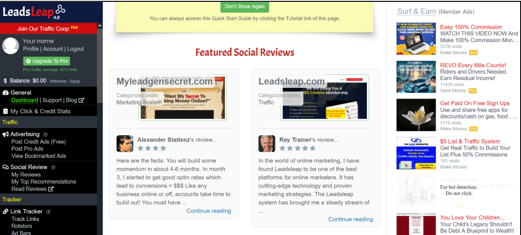
If you’re trying to build a list in the ‘make money online’ niche, LeadsLeap will help you generate targeted leads. This is LeadsLeap’s greatest strength!
Systeme.io, however, doesn’t help you drive traffic. You’re on your own here.
What Systeme.io excels in is that it’s an all-in-one marketing platform designed to help you build a business.
LeadsLeap will help you drive traffic to that business. So it definitely helps to have an account on both platforms.
- Run simple, cost-effective ads
While advertising on major platforms like Facebook or TikTok can seem intimidating, running ads on LeadsLeap is a breeze!
The audience is already targeted and looking for information related to making money online. The only downside here is that LeadsLeap’s traffic is ONLY for the ‘make money online’ niche.
If you’re in other niches such as keto diet, and others – this traffic exchange is not for you.
Using BOTH platforms to Skyrocket Your Marketing
Now that you have a general idea of how both Systeme.io and LeadsLeap work, you can leverage both platforms to generate healthy profits online.
The formula is simple…
We’ll build our landing pages, forms, sales pages, etc. on Systeme. It’s the superior platform in this regard. You can sell products, do email marketing, build a community and so on in Systeme.io.
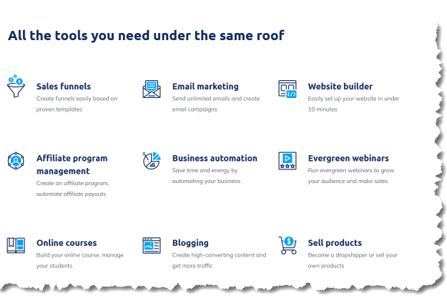
Systeme.io’s features
Now, LeadsLeap does have a landing page builder feature, and it also has an email marketing feature called SendSteed.
But Systeme’s page builder and email automation is better. So it’s better to use Systeme.io here.
Once we’ve built our landing pages and other assets, we’ll use LeadsLeap to drive traffic to our Systeme.io assets.
Without going into too much detail, there are 2 ways you can drive traffic with LeadsLeap – you can earn free credits or pay for it – or a combination of both.
There are tutorials in LeadLeap showing you how to drive traffic. It’s simple and you’ll be using it like a pro in just a few hours.
Your Important Takeaways
Systeme.io and LeadsLeap are NOT competing platforms and actually complement each other well, if you use them wisely.
Systeme has a generous free plan that will allow you to literally build a sales funnel and sell products, and build a list without paying a cent. Once your business grows, you can scale up.
Similarly, on LeadsLeap, you can build free credit by viewing other ads on the platform. Then you’ll be able to create your own ads for free. It’s faster and easier if you’re paying for ads… but if you’re on a tight budget, the free credit method works too.
From here, all you need to do is run free ads, point them to your Systeme.io pages and build your list while making sales.
You can actually make a profit without spending a cent – so why wouldn’t you?
Once you get the ball rolling and making money, you can decide if you want to upgrade your Systeme and LeadsLeap accounts to get better features and higher limits.
What’s important is that you get started by signing up and familiarizing yourself with both platforms. From there, take the steps necessary to get sales.
Join both platforms and start building a profitable online business today!